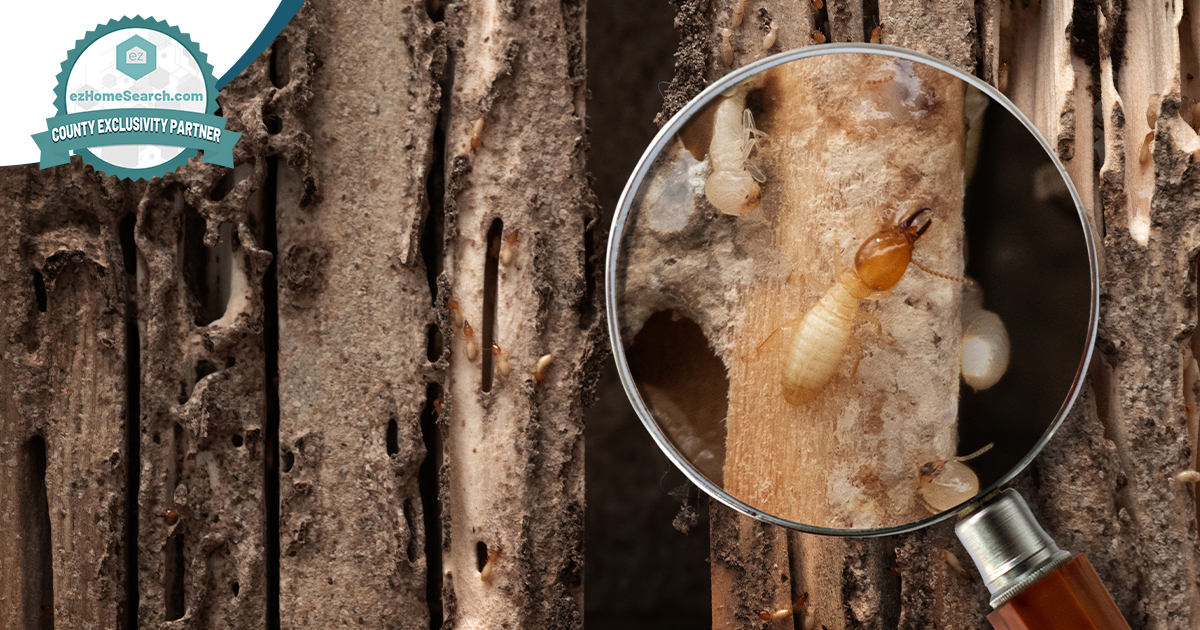
Termites don’t make grand entrances, but they sure have loud consequences. Data from the United States Department of Agriculture (USDA) places Formosan termite costs above $1 billion a year, and national estimates for all species stretch to $2 to $5 billion. Each year, about 600,000 American homes are affected.
For many homeowners, the real shock is not the termites' presence but realizing they’ve been there far longer than anyone guessed. These pests tend to work quietly, settling into the hidden parts of a home while everyday life carries on. By the time something feels “off,” there may already be an active infestation with damage often already in motion.
That’s why knowing the early signs of termite activity matters so much. A bit of awareness can stop a small issue from becoming a costly repair and protect one of the biggest investments of a lifetime: your home.
Recognizing those early signs of termites is one of the easiest ways to get ahead of a problem that quietly grows out of sight.
What Are Termites?
Termites are small insects that feed on cellulose, the main component of wood and many building materials. They live in organized colonies with workers, soldiers, and reproductive termites, each playing a specific role in keeping the colony alive.
Some termite species are native to the United States, such as several subterranean and drywood termites that have long been part of local ecosystems.
Others, like the well-known Formosan subterranean termite, are invasive and arrived through human activity, most likely inside infested shipping materials and cargo brought from East Asia in the mid-20th century.
Once introduced, they adapted quickly to warm, humid regions and spread through transported wood products and favorable environmental conditions.
Whether native or invasive, termites thrive in places where moisture, warmth, and accessible wood come together.
What Causes a Termite Infestation?
Several conditions can trigger or support a termite infestation, but moisture is the biggest draw.
Anything from a slow plumbing leak to damp soil pressed against the foundation can create the environment termites prefer. Homes with wood-to-ground contact, cracks in the structure, or mulch and debris near exterior walls also offer easy access points.
In some regions, seasonal swarms send winged termites searching for new places to start colonies, and a home with the right conditions can quickly become a target.
Types of Termites
Several termite species appear across the U.S., but most infestations fall into three main categories. Each behaves a little differently, and understanding those differences helps explain how they enter a home and the kind of damage they can cause.
Subterranean Termites
Subterranean termites can be native or invasive. It is considered the most widespread and destructive group and include species like the Formosan and the Asian subterranean termites. Keep reading to learn some of its characteristics:
They live in underground colonies and travel through soil or mud tubes to reach wood.
Native subterranean species are found across much of the country.
The Formosan subterranean termite, an invasive species introduced from East Asia, is especially aggressive and forms very large colonies.
They thrive in moist environments and are common in basements, foundations, crawl spaces, and any area with wood-to-ground contact.
Drywood Termites
Drywood termites do not rely on soil at all. Instead, they:
Live inside dry wood, including framing, furniture, flooring, and attic beams.
Infestations often start when winged termites swarm and enter through gaps in the exterior.
Are common in warm, coastal areas such as the Southeast, California, and parts of the Southwest.
Because drywood termites live entirely inside the wood they consume, they can go unnoticed until damage becomes more pronounced.
Dampwood Termites
Dampwood termites prefer wood with very high moisture content. Here are some key details about them:
They nest in wet, decaying wood, often in outdoor structures, leaky areas, or places with regular water exposure.
These termites are more common in the Pacific Northwest, along the West Coast, and in some humid coastal pockets.
Although they’re less likely to infest a typical home compared to subterranean or drywood species, damp conditions inside or near a house can give them an opening.
What You Need to Know About Their Life Cycle and Behavior

Termites follow a well-organized life cycle that allows colonies to grow continuously. Eggs develop into larvae, and from there into three main castes:
Workers: The largest group. They feed, tunnel, and care for the colony. Their constant activity is what leads to wood damage over time.
Soldiers: They defend the colony from ants and other threats.
Reproductives: This includes the king and queen, along with swarmers, the winged termites that leave the nest to start new colonies.
Also, there are a few behavioral traits important for homeowners:
Colonies eat and work continuously, day and night, which is why damage can progress faster than people expect.
Swarming happens seasonally, often during warm, humid weather. And some seasonal activity indoors is among the clearest signs a colony may be active nearby.
Termites prefer hidden, undisturbed areas, such as inside walls, under floors, or within soil. This is why infestations often go unnoticed until the colony is well established.
The Signs: How to Tell if You Have Termites
Sometimes the early signs of termites are not red flags. They blend into everyday life as small changes that don’t seem urgent or out of place. But as a colony grows, those clues become easier to spot, even if homeowners don’t immediately connect them to termite activity.
Keep reading to know more about those signals, what they look like, and how they can make all the difference once an infestation starts to take hold.
Discarded Wings Near Windowsills or Entry Points
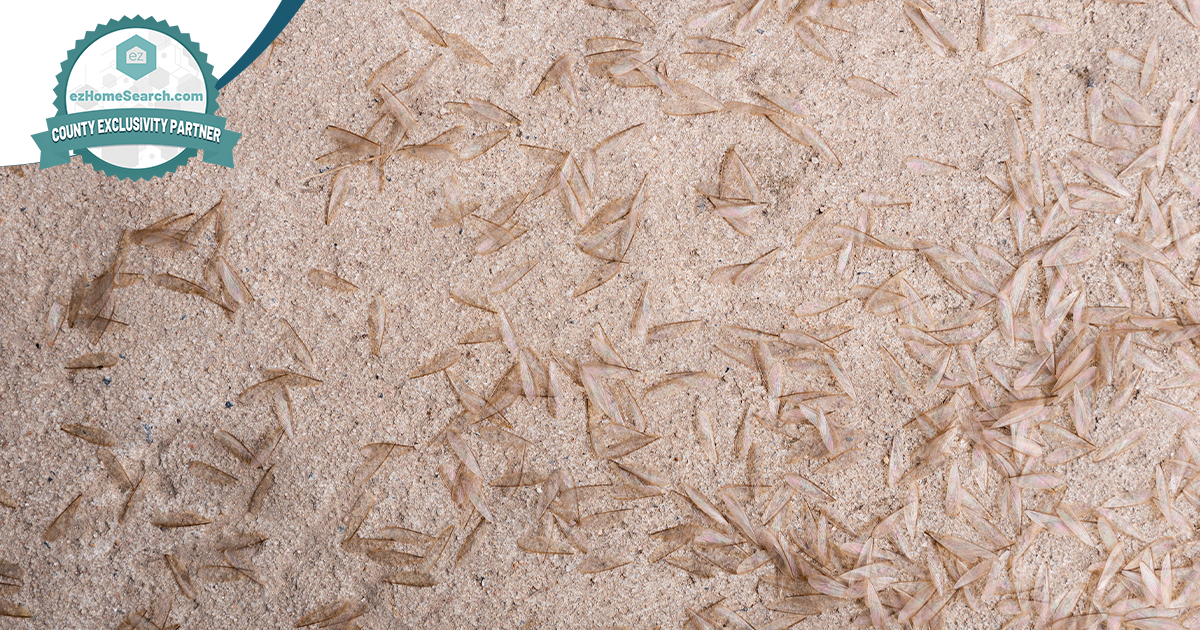
After a termite swarm, the winged termites (called swarmers) shed their wings once they settle on a new spot to start a colony.
Finding small, papery wings around windows, doors, or light fixtures is often one of the first noticeable indicators that termites may be trying to establish themselves in or near your home. These wings usually appear in small piles and are easy to mistake for insect debris.
Mud Tubes on Foundations or Walls
Subterranean termites build narrow tubes made of soil and saliva to travel safely between their underground nest and a food source. These tubes help them stay moist and hidden, two things they rely on to survive.
If you see pencil-thin mud tunnels running along the foundation, porch posts, crawl space walls, or even interior surfaces of you house, it’s a strong sign that termites are actively moving through the structure.
Wood That Sounds Hollow When Tapped
Termites eat wood from the inside out, leaving only a thin outer shell intact. When you tap on an area they’ve been feeding on, it may sound hollow, soft, or papery.
This happens because much of the internal structure has already been consumed. Homeowners sometimes notice this when doing small repairs or even while vacuuming or moving furniture.
Termite Droppings (Frass)
This is probably the most classic termite sign in the book. Drywood termites leave behind tiny, sand-like pellets known as frass.
These droppings are usually found near baseboards, window frames, attic beams, or wooden furniture. They’re often swept up without much thought, but their presence can mean termites are actively feeding inside the wood.
The pellets are uniform in shape and tend to form small mounds, and they often reappear in the same spot even after being cleaned, a telling clue that something is happening behind the surface.
Small Holes or Blistering in Wood or Drywall
Pin-sized holes in wood or drywall can be the exit points for termites pushing out frass or expanding their tunnels. Blistering paint or drywall that looks like water damage may also be caused by termites working just beneath the surface.
And because termites can also feed on paper backing, insulation, cardboard storage boxes, and even books, the damage isn’t always limited to wood itself. These signs are subtle but become more pronounced as the colony grows.
Clicking or Tapping Sounds Inside Walls

Termites aren’t loud, but they’re not completely silent either. Soldier termites sometimes bang their heads against the walls of their tunnels to signal danger, creating soft clicking sounds.
Homeowners occasionally notice faint rustling inside walls as workers move through the wood. These noises tend to be more noticeable in quiet rooms or at night.
It’s also worth knowing that termites respond to vibrations. Research shows that certain species will increase their tapping when they sense movement or noise nearby, which is why the sound can seem sharper when a homeowner knocks on a wall or walks past an infested area. This is not to be mistaken with aggression; it’s just how colonies communicate.
Damaged Wood That Breaks Easily
Wood that crumbles or snaps apart with very little pressure is often a sign of internal termite damage. What may look solid from the outside can break apart in thin layers or in a pattern that follows the wood grain. This typically indicates that termites have been feeding in that area for some time.
Swarmers Inside the Home
Swarmers are reproductive termites that emerge seasonally to start new colonies. Seeing them indoors near windows, sliding doors, or lights his a strong indicator that a colony may already be active in the structure. Even a small number of swarmers inside warrants attention.
They’re often mistaken for flying ants, since both appear in warm weather and are attracted to light. The difference is that termite swarmers have straight antennae and equal-length wings, which can help homeowners tell them apart.
While swarmers don’t bite or sting, their presence can still trigger mild allergy symptoms in some people, especially if large numbers shed their wings.
Tight-Fitting Doors or Stuck Windows
As termites feed, they introduce moisture into the wood, which can cause frames to swell. Suddenly stiff doors or sticky windows, especially in areas that never gave you trouble before, can signal termite activity around the frames or nearby structures. Many homeowners chalk this up to humidity when the real cause may be hidden damage.
Termite Presence in Attics, Rooflines, or Eaves
Drywood termites often enter through attic vents, soffits, fascia boards, and roof edges. Signs in these areas, such as small holes, frass, weakened beams, or even discarded wings, can indicate activity in the upper portions of the home. These locations are easy to overlook, which is why infestations sometimes grow unnoticed.
There Are Termite Signs in My House: What Are My Options?
Finding signs of termites can be disconcerting for any homeowner. It’s your home, your biggest investment, and suddenly there’s the possibility of hidden damage.
Take a moment. You don’t need to solve everything today, but you do need a clear, steady plan for what comes next.
1. Start by Confirming What You’re Seeing
Before assuming the worst, focus on clarity. Early steps can help a professional identify what’s going on:
Take photos of wings, frass, mud tubes, or any suspicious wood damage.
Collect samples if you can (wings or droppings), without disturbing large areas.
Avoid opening walls or tearing out wood. This can actually complicate the inspection.
A licensed termite inspector is your next best step. They can tell you:
Whether the signs point to termites or another pest (like carpenter ants).
Which type of termite might be present.
How active and widespread the issue appears to be.
Sometimes just having someone walk through the home and explain things helps ease the initial stress.
2. Get a Professional Evaluation (and Compare Quotes)
Termite treatments vary widely in cost and approach, so getting two or three opinions is perfectly reasonable. Ask each company:
What species of termite do you think this is?
Where is the activity concentrated?
What treatment do you recommend and why?
What does the warranty include, and for how long?
Will there be follow-up visits or monitoring?
A good, trustworthy technician should explain everything in simple terms.
3. Know the Common Treatment Options
Your treatment will depend on the species and how far the colony has spread. Most homeowners encounter one of these:
Liquid Treatments: Applied around the foundation to create a protective treatment zone, commonly used for subterranean termites.
Baiting Systems: Stations placed in the soil that termites feed from and carry back to the colony. Effective for long-term control.
Localized Wood Treatments: Used for small, contained drywood infestations. Technicians treat or inject affected wood directly.
Whole-Structure Fumigation: Reserved for severe or widespread drywood problems. Requires tenting but can eliminate colonies throughout the home.
You should receive a clear explanation of cost, preparation, and what to expect during and after treatment.
4. Plan for Repairs, Costs, and Documentation
Most homeowners insurance policies do not cover termite damage, since it’s considered a maintenance issue. Still, it’s worth:
Reviewing your policy or calling your insurer just to confirm.
Getting a written inspection report and treatment plan useful for contractors and future buyers.
Requesting repair estimates if structural or cosmetic damage needs attention.
It’s not easy to think about repairs, but handling them early helps limit long-term impact.
5. Protect Your Home From Future Infestations
Once treatment is handled, prevention becomes your new best tool. A few smart habits make a big difference:
Fix moisture issues such as leaky pipes, soggy soil near foundations, clogged gutters.
Reduce wood-to-soil contact around the exterior of the house.
Store firewood, cardboard, and lumber away from exterior walls.
Schedule yearly inspections or whatever frequency your professional recommends.
These steps would protect your home and give you back a sense of control and calm after a stressful discovery.
The Bottom Line: How to Tell if You Have Termites
Discovering possible termite activity isn’t anyone’s favorite moment, but knowing what to look for gives you real power. Once you understand the signs, you can catch problems earlier, protect your home, and feel more confident about the steps ahead.
And remember: you don’t have to face any of this alone. A good inspection, a solid plan, and a bit of prevention go a long way in keeping your home safe and sound.
Key Takeaways
Small clues matter. Termite signs often start subtle, and recognizing them early can prevent far bigger repairs later.
Confirmation is essential. A licensed inspection helps you understand the species, the extent of the issue, and the right treatment options.
Prevention protects your investment. Moisture control, sealing entry points, and routine checkups make your home far less appealing to termites over time.
About the Author: Preston Guyton is the founder of ez Home Search. He has been a real estate leader for over 20 years. Starting with a focus on South Carolina, he has helped coach and empower real estate professionals to achieve their full potential by meeting the needs of their local community.